
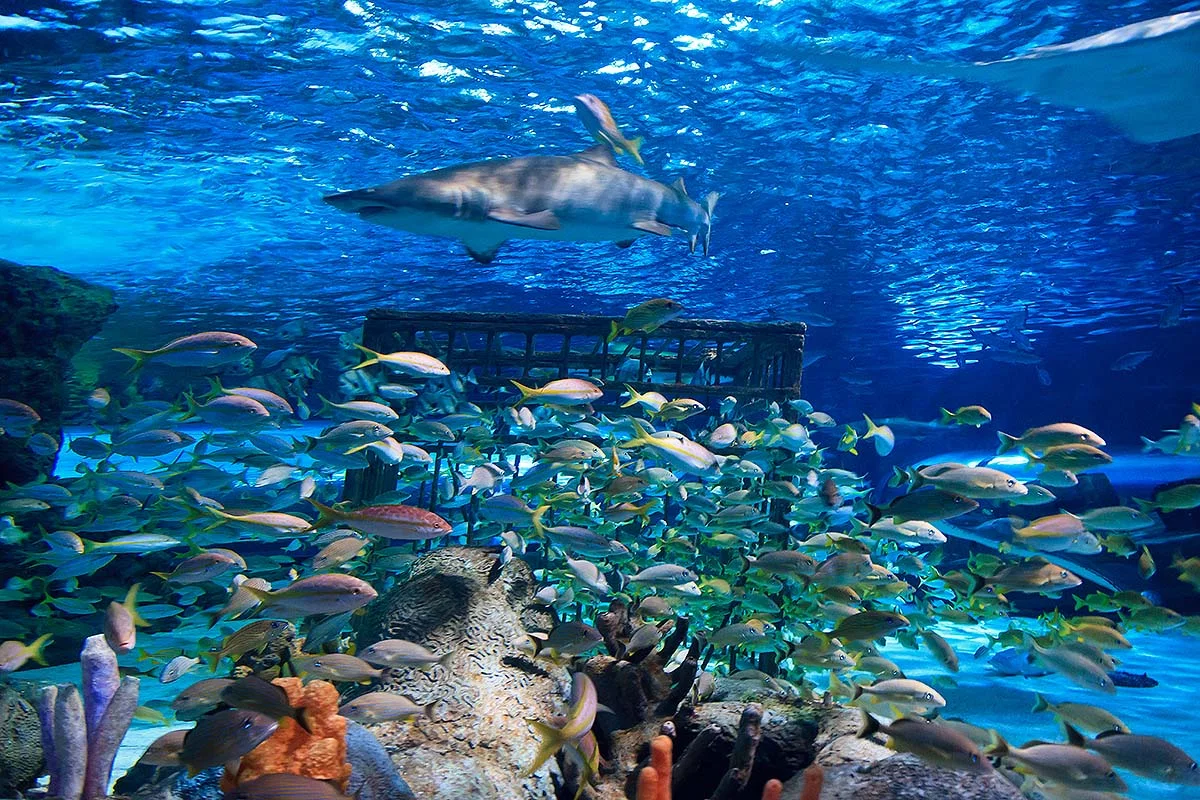
South Carolina Aquarium is one of Charleston's more meaningful attraction event venue options because it changes the event strategy in concrete ways. Venue choice here is not simply aesthetic.
Current event materials describe the aquarium as a downtown waterfront venue for weddings, corporate events, and social gatherings.
Useful for downtown receptions, after-hours corporate events, fundraisers, sponsor activations, and client hospitality with harbor views.
Treat the aquarium as a partner-based venue where catering and bar service follow venue-selected providers and the venue team coordinates guest-facing event flow.
For the aquarium, a venue section that does its job well lets the buyer see, the buyer can quickly see whether the building matches the commercial objective and what must be managed differently here than at another Charleston property.
Verified venue facts
What we know about South Carolina Aquarium
- Current event materials describe the aquarium as a downtown waterfront venue for weddings, corporate events, and social gatherings.
- The same section says the Aquarium Galleries and Harbor Overlook accommodate guest counts up to 500.
- Official event copy says the venue uses exclusive catering partners and an exclusive bar partner.
About South Carolina Aquarium
The Aquarium Galleries and Harbor Overlook accommodate guest counts up to 500.
Located at Waterfront / Maritime District.
Projects at the aquarium start with its published floor plan, dock schedule, and service-order deadlines. Everything downstream — build, freight, install, labor — is planned against those real inputs.
Line items on a typical project
On the aquarium, project scope usually spans design, fabrication, graphics, AV, labor coordination, freight, install, show-hours support, and strike.
On a the aquarium build, typical line items include booth structure (custom or rental), graphics and print, AV and lighting, show-service orders (power, internet, rigging), labor calls against the venue's rules, freight both ways, on-site supervision, and post-show closeout documentation.
The handoffs on a project at the aquarium matter almost as much as the line items. Design has to hand a build-ready drawing to fabrication. Every handoff is a place quality can drop.
Those run alongside the engagement rather than inside it.
Operational rules on the Charleston floor
On the aquarium, Charleston floor operations follow the venue's own manual. Dock timing, utility orders, rigging, and crew calls all come out of that document.
On the aquarium, the workable version of Charleston labor planning is boring on purpose: read the manual, match the scope to its categories, order what the venue sells directly, and schedule everything else around its posted windows. Surprises almost always trace back to a step someone skipped.
For the aquarium, The Cedar Room and Mercantile and Mash are the exclusive catering and bar service for the venue.
Practical planning rules for the aquarium in Charleston: Venue labor and service expectations vary by property, so current venue instructions should be reviewed before promising any specific outside-scope path. The North Charleston campus is best described as venue-managed and service-order-driven rather than with a blanket citywide labor label.
The Charleston event landscape
For the aquarium, Charleston is a working trade show market. Its anchor venues host hundreds of events a year, and the rhythm of load-in, show hours, and strike is well-established across the local vendor base.
Scope gets tighter, standards do not.
For the aquarium, Charleston International Airport has nonstop service to 50 destinations in the U.S. And Canada, which sets the practical ceiling for a booth program working the market.
What an engagement actually looks like
Every the aquarium engagement starts with a scope conversation: the show, the venue, the booth number, the dates, and the budget frame. Ten minutes of specifics produces a better the aquarium plan than a week of generalities.
Once the aquarium scope is clear, the venue work begins. Exhibitor manual, dock times, utility order IDs, rigging submissions for hanging elements, and labor calls all get locked against the venue's actual rules.
On a the aquarium build, production brings the plan into physical form: fabrication, graphics, AV, rentals, and the named lead who will run the floor.
Not a rotating crew, not a remote account manager.
For the aquarium, show-hours coverage is part of every engagement, not a premium add-on. On-floor support keeps the booth running while the client team runs the pipeline.
That document drives the next the aquarium booking.
Pricing and scheduling
There is not a single price. There is a configuration.
On a the aquarium build, cost scales with how it is built, how big it is, what the venue charges for its own services, how the graphics are produced, how far the crates travel, and how many days the team stays on-site.
On the aquarium timing: custom builds for Charleston shows run best with 16 to 20 weeks of lead time. Rental programs run on 8 to 12.
How project performance gets measured
A the aquarium project runs well when install clears the venue's published window, all show services land as ordered, the booth performs across every show day without pulling the client team off pipeline work, and strike clears the dock before the next occupant loads in.
On a the aquarium build, ROI is measured at the lead and pipeline level. The show-floor execution either protects or undermines those numbers.
That feedback shapes the next the aquarium engagement rather than getting lost.
What makes our work different
A graphic that needs to be reprinted at 6 a.m.
Clients who run repeat programs across multiple dates pay less per event when the same team handles everything. Less re-briefing, less re-training, less re-checking. The operational overhead drops year over year.
South Carolina Aquarium planning questions
How does labor work in Charleston?
It runs venue by venue.
How much lead time is ideal?
Custom builds run best with 16 to 20 weeks of lead time. Rentals take 8 to 12 weeks.
What information kicks off a project?
The show, the venue, the booth number, the dates, and a target budget range. From those, an initial scope and a realistic cost come back within a few days.
Who runs the booth on-site?
One named show-site lead runs the install, the show hours, and the strike. That person carries the floor plan and the punch list from crates to doors and reports up once a day.
Can the booth travel to the next city on our calendar?
Same structure, swappable graphics, standard crates.
What happens if something breaks during show hours?
The on-site lead handles it.