
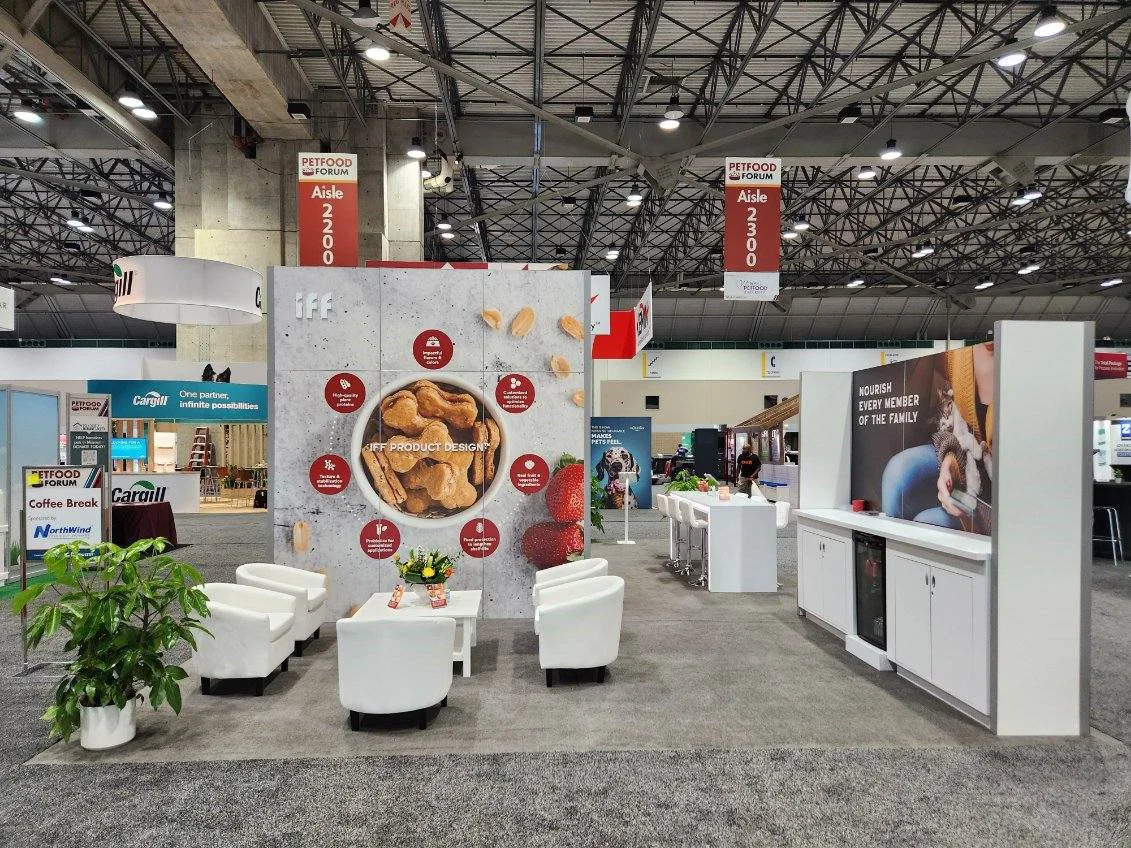
Trade Show Strategy and Pre-Show Planning is most useful when it creates clarity.
in practice, though, the planning discipline behind the planning is what keeps the room from splitting into disconnected tracks for design, logistics, labor, and client approvals.
CHS route access plus the convention-center district's hotel base make fly-in regional meetings and distributor events defensible demand slices.
Charleston Harbor Resort & Marina, South Carolina Aquarium, and Embassy Suites Charleston Airport Hotel & Convention Center all prove the same point: the room may change, but the project still needs one chain of responsibility from kickoff through strike.
On the planning, a strong management path defines what is fixed, what is still flexible, which deadlines are truly consequential, and who has the authority to approve changes once the schedule tightens.
For the planning, that produces a better event and a more defensible budget because the client is not paying for avoidable confusion between stakeholders.
Charleston as a trade show city
For the planning, exhibiting in Charleston means working inside an established event ecosystem.
For the planning, exhibitors pulling back on budget in Charleston still have to show up in the same booth neighborhoods as their competitors. Scope gets tighter, standards do not.
For the planning, Charleston is a world-class destination, and gatherings in the market average 10-15% more attendance, which sets the practical ceiling for a booth program working the market.
For the planning, Charleston International Airport has nonstop service to 50 destinations in the U.S. And Canada — a useful reference point when sizing a project.
Where Charleston shows actually happen
For the planning, every Charleston show takes place in a specific building with its own rules.
On the planning, the right building depends on the show: a consumer expo wants open aisles and broad traffic flow; a corporate conference wants controlled breakout space; a brand activation wants a venue that can carry scenic and production without fighting the architecture.
South Carolina Aquarium. The Aquarium Galleries and Harbor Overlook accommodate guest counts up to 500.
The Cedar Room is one of the anchors.
Why Trade Show Services of Charleston
Trade Show Services of Charleston keeps work local.
Across the planning show dates, consistency is the other reason to hire local.
Who handles what during the Charleston install window
On the planning, there is no single labor model for Charleston trade shows.
On the planning, the labor plan takes one call with the venue's exhibitor services desk, one review of the current manual, and one email to the general contractor.
For the planning at the South Carolina Aquarium, the venue uses exclusive catering partners and an exclusive bar partner.
For the planning, the North Charleston campus is venue-managed and service-order-driven rather than carrying a blanket citywide labor label.
The main Charleston event areas
The Daniel Island and East Cooper Extension area runs through Daniel Island, Cainhoy, Mount Pleasant.
For the planning, the Summerville / Nexton Growth Corridor (Summerville, Nexton, Sangaree) — is a different environment.
Line items on a typical project
The planning projects typically include design work, fabrication or rental sourcing, graphics production, show-service paperwork, freight, install, show-hours coverage, and strike.
On a the planning engagement, the budget usually carries structure, graphics, AV, show-service orders through the venue, labor, freight, supervision days, and closeout. Items layer in or drop out based on the planning scope.
The handoffs on a the planning project matter almost as much as the line items. Design has to hand a build-ready drawing to fabrication. Every handoff is a place quality can drop.
On the planning, a clean scope definition also calls out what is not included: show organizer fees, client staff travel, and anything the client already has under contract (lead capture platforms, CRM integrations, promotional giveaways). Those run alongside the engagement rather than inside it.
From first call to strike
Every the planning engagement begins the same way. From those four inputs, a real plan can be built.
After the planning brief, the work turns to the building itself.
On the planning, production covers fabrication, graphics, AV spec, rentals, and crew chief assignment.
On the planning, install days are owned by a single on-site lead.
During the planning show hours, the on-site lead stays present.
For the planning, strike and closeout happen the same day.
Cost and lead time
Every the planning project has the same cost drivers.
On the planning, six variables drive the cost: custom versus rental, booth footprint and complexity, venue-specific labor and rigging fees, graphics scope and substrate, freight distance and timing, and the number of on-site supervision days.
On the planning, lead time drives everything. Custom: 16 to 20 weeks. Rental: 8 to 12.
How project performance gets measured
The measure of a good the planning engagement is simple: on-time install, no venue callouts, clean show hours, and a closeout that makes the next event easier to book.
A week after the show, the planning build's actual floor performance is already clearer than any pre-show projection.
Trade Show Strategy and Pre-Show Planning questions
Do you work at Charleston Marriott?
Yes.
How does labor work in Charleston?
It runs venue by venue.
How much lead time is ideal?
Custom builds run best with 16 to 20 weeks of lead time. Rentals take 8 to 12 weeks.
What information kicks off a project?
The show, the venue, the booth number, the dates, and a target budget range. From those, an initial scope and a realistic cost come back within a few days.
Who runs the booth on-site?
One named show-site lead runs the install, the show hours, and the strike. That person carries the floor plan and the punch list from crates to doors and reports up once a day.
Can the booth travel to the next city on our calendar?
Same structure, swappable graphics, standard crates.
What happens if something breaks during show hours?
The on-site lead handles it.