
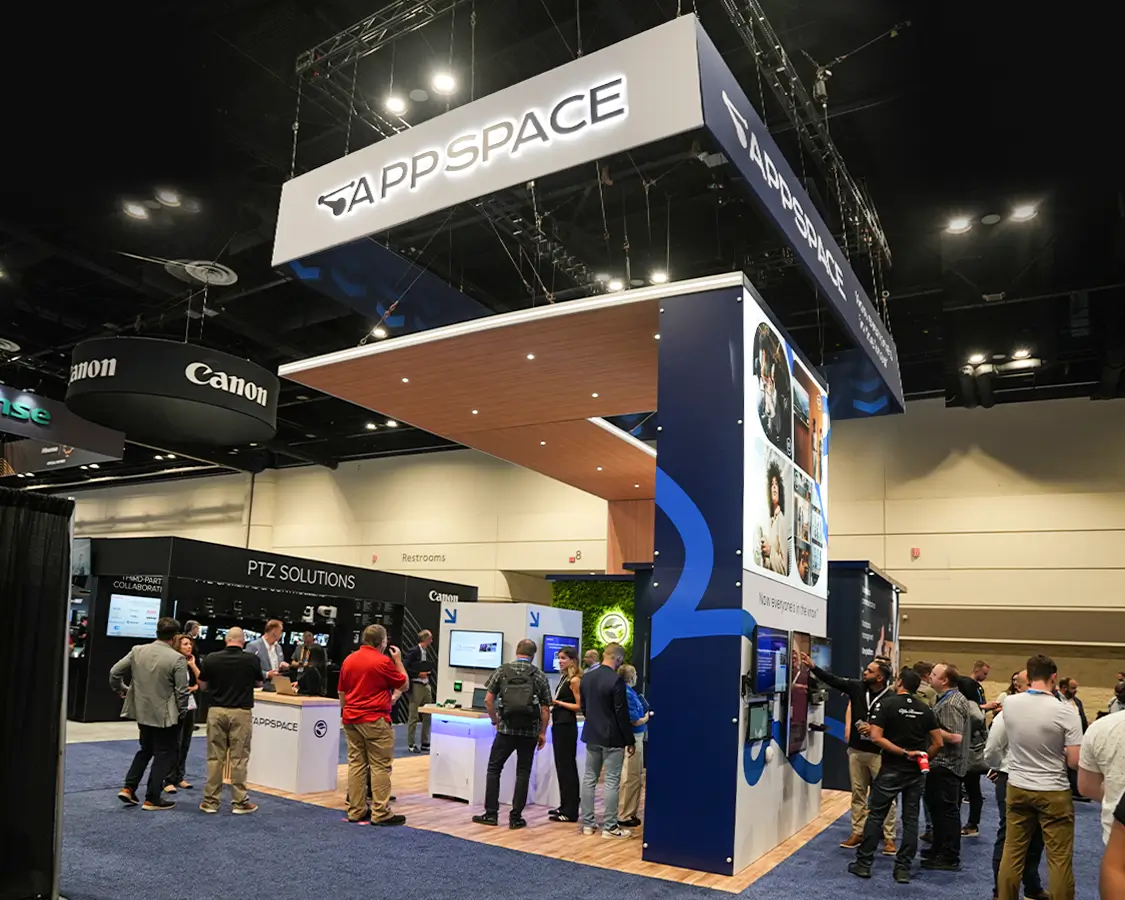
In Charleston, the services should be judged through general session transitions, breakout rhythm, registration control, and executive-facing presentation quality.
The best local fit is usually found in downtown hotels, cultural venues, and conference properties that balance content, hospitality, and guest comfort.
The real pressure sits around show flow, AV readiness, room resets, and sponsor moments that cannot disrupt the agenda.
What drives the Charleston calendar
For the services, Charleston runs one of the busiest trade show calendars in the region. Convention weeks stack close together, hotel blocks compete for the same nights, and the venues themselves shape what is possible on the floor.
Scope gets tighter, standards do not.
For the services, Charleston International Airport has nonstop service to 50 destinations in the U.S. And Canada — a useful reference point when sizing a project.
The buildings that host Charleston events
The Cedar Room.
For the services, Memminger Auditorium is a historic venue located at 56 Beaufain Street on the Charleston peninsula, originally built in 1939 as a school auditorium.
What makes our work different
On work, having a Charleston-based shop matters most when something goes wrong on-site. Solutions live within driving distance instead of on another coast.
Across the services show dates, consistency is the other reason to hire local. The same crew that built the booth runs the install, knows the pack-out, and catches the small things: a missing hardware pack, a graphic edge that needs reseating, a storage crate routed to the wrong bay, without pulling the client team in.
How Charleston floor operations work
On the services, labor in Charleston runs venue-by-venue, not citywide. Each building publishes its own rules for who handles what on the floor.
For the services, that means pulling the current exhibitor manual for every show and confirming a handful of items in writing: which tasks the venue's house crews cover, which tasks the show's general contractor covers, and what an exhibitor or their appointed contractor can handle without escalation.
For the services, exhibitors at Charleston Area Convention Center must use the rear loading dock off Montague Avenue, identifies Sodexo Catering for exhibit-hall catering and concessions, and describes PRX Exposition Services as a preferred but non-exclusive decorator for consumer trade shows and expositions.
Charleston neighborhoods and event districts
Charleston, Downtown Charleston, Charleston Peninsula, Upper King form the Historic Charleston Peninsula cluster.
For the services, the North Charleston Convention Campus runs across North Charleston, Convention Center / Tanger District, Airport Corridor. The region's strongest trade-show and expo cluster, designed around the convention center, adjacent campus venues, airport access, and nearby hotel inventory.
Line items on a typical project
A full the services engagement covers scope development, fabrication or rental, graphics, show services, logistics, and on-site execution from move-in through dismantle.
On a the services format, typical line items include booth structure (custom or rental), graphics and print, AV and lighting, show-service orders (power, internet, rigging), labor calls against the venue's rules, freight both ways, on-site supervision, and post-show closeout documentation.
On the services, good execution comes from keeping the team small and the handoffs short. Every extra vendor in the chain adds a communication layer and a place where details get lost.
How a project runs
From those four inputs, a real plan can be built.
On the services, production covers fabrication, graphics, AV spec, rentals, and crew chief assignment. It is the longest phase of most projects and the one where timelines are either protected or lost.
On the services, install days are owned by a single on-site lead. That person carries the plan, works the punch list in real time, and reports up once a day with real status.
For the services, strike and closeout happen the same day. Storage labels, outbound manifests, vendor performance notes, and a written debrief go out within 24 hours of doors closing.
Pricing and scheduling
Every the services project has the same cost drivers. The number depends on scope, and scope depends on a handful of specific variables.
On the services, six variables drive the cost: custom versus rental, booth footprint and complexity, venue-specific labor and rigging fees, graphics scope and substrate, freight distance and timing, and the number of on-site supervision days.
What a successful project looks like
Most programs in Charleston are evaluated on lead-capture volume, meetings booked on the floor, and qualified-pipeline attribution after the show. The booth is a means to those numbers, not the number itself.
A week after the show, the services build's actual floor performance is already clearer than any pre-show projection. We document those observations alongside the technical closeout so the next cycle inherits real signal, not nostalgia.
Corporate Event Services planning questions
Do you work at Charleston Gaillard Center?
Yes.
How does labor work in Charleston?
It runs venue by venue.
How much lead time is ideal?
Custom builds run best with 16 to 20 weeks of lead time. Rentals take 8 to 12 weeks.
What information kicks off a project?
The show, the venue, the booth number, the dates, and a target budget range. From those, an initial scope and a realistic cost come back within a few days.
Who runs the booth on-site?
One named show-site lead runs the install, the show hours, and the strike. That person carries the floor plan and the punch list from crates to doors and reports up once a day.
Can the booth travel to the next city on our calendar?
Same structure, swappable graphics, standard crates.
What happens if something breaks during show hours?
The on-site lead handles it.