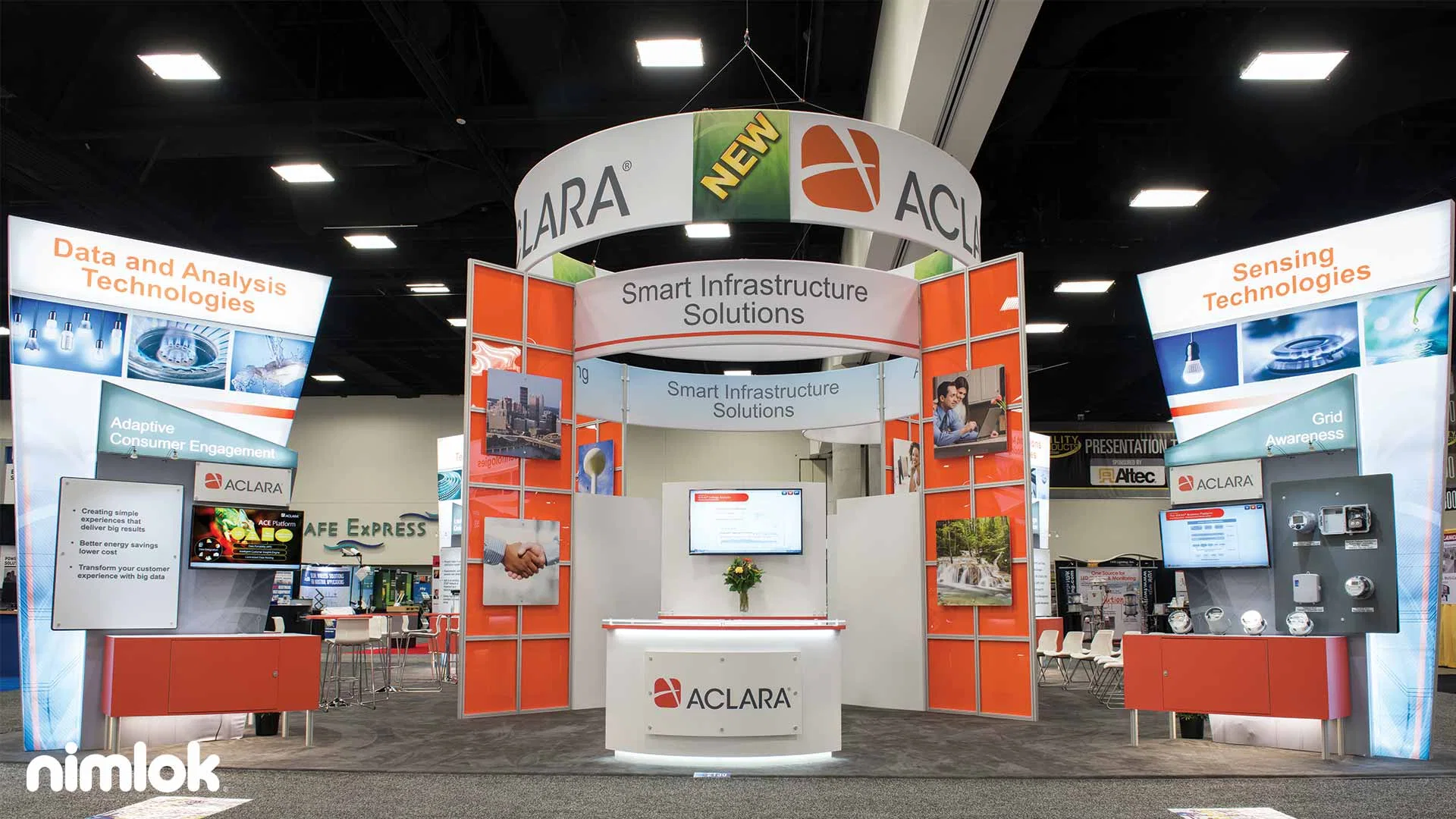
Modular Trade Show Booths is really a decision about how the client wants people to move, pause, and engage once the booth opens.
This booth type is strongest when the goal is faster-turn programs that still need a polished brand environment and cleaner reuse across dates.
Its main advantage is flexibility and repeatability. Its most common risk is assuming faster setup means easier execution without a real support plan.
For the booths, booth-type planning needs to stay tied to the venue and schedule.
Done well, Modular Trade Show Booths protects both sales performance and operational calm.
Charleston venues we work
On the booths, Charleston events cluster around a small number of venues, and each one has a different personality on the floor.
The plan has to match the specific building.
Charleston Harbor Resort & Marina is one of the anchors.
For the booths, current meetings materials say the property has more than 6,100 square feet of indoor meeting space, 34,000 square feet of outdoor meeting space, and hotels offering more than 200 guestrooms.
The Yacht Club at Charleston Harbor Resort & Marina. The Yacht Club contains 2,100 square feet of event space.
Kiawah Island Golf Resort: current meetings materials say the resort offers 35,000 square feet of conference-center facilities and outdoor spaces for groups.
Operational rules on the Charleston floor
On the booths, Charleston floor operations follow the venue's own manual. Dock timing, utility orders, rigging, and crew calls all come out of that document.
On the booths, the workable version of Charleston labor planning is boring on purpose: read the manual, match the scope to its categories, order what the venue sells directly, and schedule everything else around its posted windows. Surprises almost always trace back to a step someone skipped.
For the booths, exhibitors at Charleston Area Convention Center must use the rear loading dock off Montague Avenue, identifies Sodexo Catering for exhibit-hall catering and concessions, and describes PRX Exposition Services as a preferred but non-exclusive decorator for consumer trade shows and expositions.
Practical planning rules for the booths in Charleston: Venue labor and service expectations vary by property, so current venue instructions should be reviewed before promising any specific outside-scope path. The North Charleston campus is best described as venue-managed and service-order-driven rather than with a blanket citywide labor label.
The main Charleston event areas
Summerville, Nexton, Sangaree, Ladson form the Summerville / Nexton Growth Corridor cluster.
For the booths, the Daniel Island and East Cooper Extension runs across Daniel Island, Cainhoy, Mount Pleasant. This cluster broadens the East Cooper story into premium corporate, sponsor, and high-end private-event demand.
Line items on a typical project
A full the booths engagement covers scope development, fabrication or rental, graphics, show services, logistics, and on-site execution from move-in through dismantle.
On a the booths build, typical line items include booth structure (custom or rental), graphics and print, AV and lighting, show-service orders (power, internet, rigging), labor calls against the venue's rules, freight both ways, on-site supervision, and post-show closeout documentation.
On the booths, good execution comes from keeping the team small and the handoffs short. Every extra vendor in the chain adds a communication layer and a place where details get lost.
On the booths, out of scope by default are show organizer fees, booth lease costs paid directly to the show, staff travel and per diems, and any custom software or data-capture tooling the client runs on its own stack. Those stay on the client side and plug into the project through coordination, not rebilling.
What an engagement actually looks like
Every the booths engagement starts with a scope conversation: the show, the venue, the booth number, the dates, and the budget frame. Ten minutes of specifics produces a better the booths plan than a week of generalities.
After the booths brief, the work turns to the building itself. Dock windows, utility orders, rigging approvals, and labor calls are confirmed in writing before anything goes to fabrication.
With the booths venue details locked, production runs. Build, print, AV integration, rentals, and the on-site lead's playbook all come together in this phase.
On the booths build, one named show-site lead runs the install. Not a rotating crew, not a remote account manager.
During the booths show hours, the on-site lead stays present. Tech breaks, sponsor changes, venue requests, all handled without pulling the client team off the floor.
After the booths show hours, strike runs against the venue's posted window, and a same-day debrief captures what held and what needs to change before the next date.
What it costs and how fast it moves
Every the booths project has the same cost drivers. The number depends on scope, and scope depends on a handful of specific variables.
On the booths, the levers that matter are build path (custom, rental, or hybrid), footprint, venue service fees, graphics, freight, and supervision days. A 10x10 turnkey rental and a 30x50 custom island with a double deck are entirely different projects.
On the booths timing: custom builds for Charleston shows run best with 16 to 20 weeks of lead time. Rental programs run on 8 to 12.
What a successful project looks like
The measure of a good the booths engagement is simple: on-time install, no venue callouts, clean show hours, and a closeout that makes the next event easier to book.
Exhibitors who measure the booths seriously track leads, floor-booked meetings, and post-show pipeline. The build and the install are upstream inputs to those KPIs.
On the booths build, the post-show debrief connects the numbers back to the physical build. That feedback shapes the next the booths engagement rather than getting lost.
How we're built to run your project
On work, having a Charleston-based shop matters most when something goes wrong on-site. Solutions live within driving distance instead of on another coast.
Over a multi-show the booths calendar, the compound value of a single team shows up in fewer surprises. The second install is faster than the first, the third faster than the second, and by the fourth the project runs on memory and documentation rather than first-principles planning.
The Charleston event landscape
For the booths, Charleston is a working trade show market. Its anchor venues host hundreds of events a year, and the rhythm of load-in, show hours, and strike is well-established across the local vendor base.
Scope gets tighter, standards do not.
and Canada.
For the booths, Meet Charleston highlights I-26 and US 17 as the core highway approaches into the market — a useful reference point when sizing a project.
Modular Trade Show Booths planning questions
Do you work at the Citadel Alumni Center?
Yes. The Citadel Alumni Center serves as a venue for university events, alumni gatherings, leadership programs, and private functions on the Citadel campus.
How does labor work in Charleston?
It runs venue by venue.
How much lead time is ideal?
Custom builds run best with 16 to 20 weeks of lead time. Rentals take 8 to 12 weeks.
What information kicks off a project?
The show, the venue, the booth number, the dates, and a target budget range. From those, an initial scope and a realistic cost come back within a few days.
Who runs the booth on-site?
One named show-site lead runs the install, the show hours, and the strike. That person carries the floor plan and the punch list from crates to doors and reports up once a day.
Can the booth travel to the next city on our calendar?
Same structure, swappable graphics, standard crates.
What happens if something breaks during show hours?
The on-site lead handles it.